

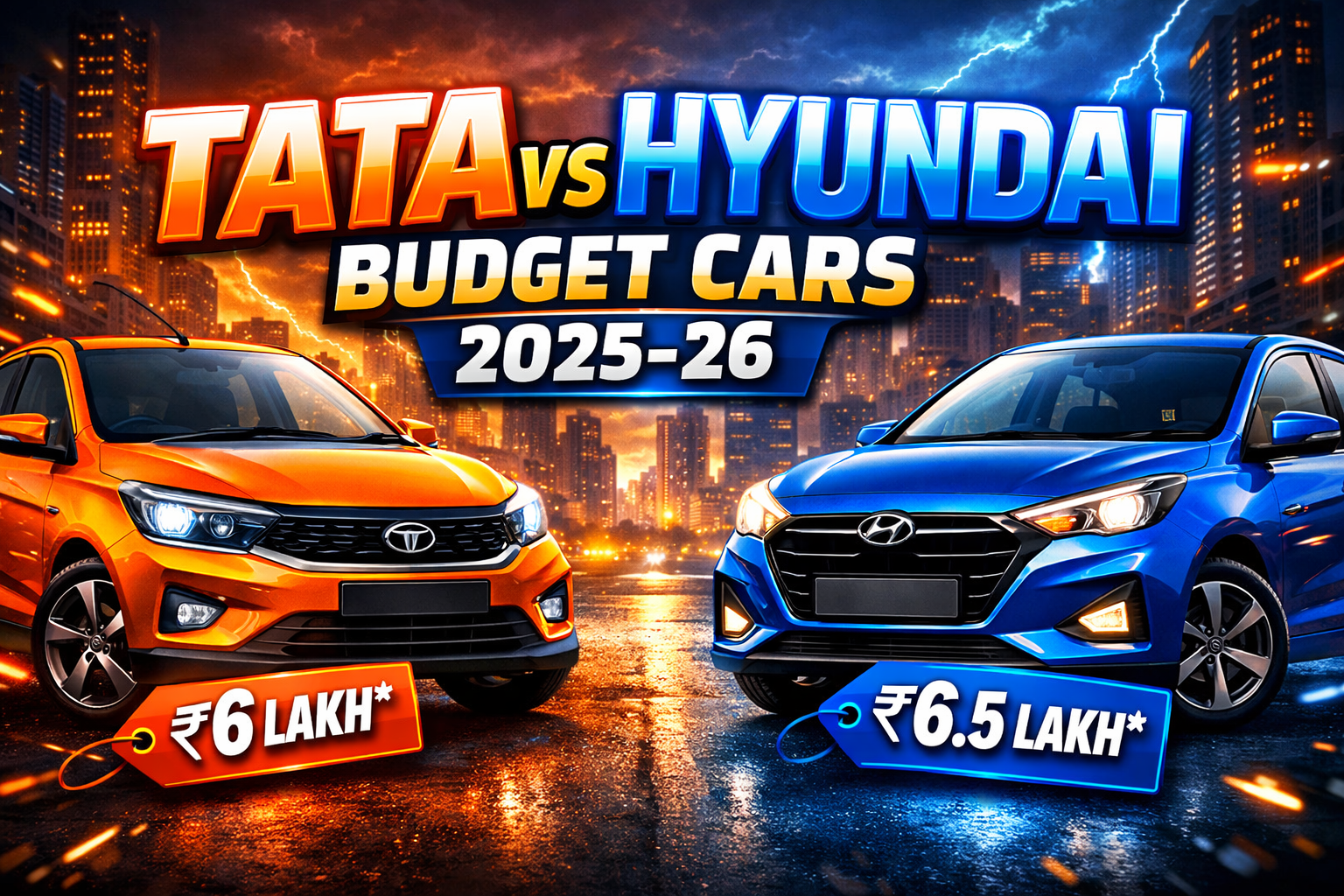
When it comes to buying a budget car in India, **Tata Motors and Hyundai** are two of the most trusted brands. Both manufacturers offer reliable, feature-rich cars in the ₹5-15 lakh segment — but they focus on slightly different priorities. Tata prioritizes safety, strong build quality, and rugged design, while Hyundai focuses on refined driving dynamics, premium interiors, and efficient engines.
Popular Budget Models Compared
Here’s a side-by-side look at the most relevant Tata and Hyundai models in the budget category (including upcoming or refreshed versions expected in 2025–26):
- Tata Tiago / Tata Altroz vs Hyundai Grand i10 NIOS
- Tata Punch / Tata Punch Facelift vs Hyundai Exter
- Tata HBX vs Hyundai AXI (if launched)
- Tata Tigor EV / Tata Tiago EV vs Hyundai’s future EV hatchback (speculated)
Price Segment Comparison (Expected / Market Range)
| Model | Price Range (₹ ex-showroom) | Category |
|---|---|---|
| Tata Tiago | ₹6.00 – 8.00 L | Hatchback |
| Hyundai Grand i10 NIOS | ₹6.20 – 8.20 L | Hatchback |
| Tata Punch | ₹6.00 – 9.00 L | Compact SUV |
| Hyundai Exter | ₹6.50 – 9.20 L | Mini SUV |
| Tata Altroz | ₹7.50 – 10.50 L | Premium Hatchback |
| Hyundai i20 | ₹7.80 – 11.00 L | Premium Hatchback |
| Tata Tigor EV | ₹8.00 – 10.50 L | EV Sedan |
| Hyundai (Upcoming EV) | ₹8.50 – 12.00 L* | EV Hatchback |
*Hyundai’s upcoming budget EV price is based on industry expectations and competitor positioning — final pricing may vary.
Feature Comparison: Tata vs Hyundai
Below is a deeper look at core aspects that matter most to budget car buyers:
- Build & Safety
Tata cars are widely regarded for **strong structural rigidity and high crash test performance**, thanks to thicker body panels and robust engineering. Hyundai builds are refined and safe, but often tuned for comfort over rugged durability. - Ride & Handling
Hyundai models like the Grand i10 NIOS and Exter typically deliver **smooth ride quality and composed handling**, making them ideal for city traffic and highway cruising. Tata cars such as the Punch and Altroz focus on **stable ride and high ground clearance**, advantageous on uneven Indian roads. - Interior & Comfort
Hyundai often leads here with **refined interiors, premium seat fabric, quieter cabins, and ergonomics**. Tata interiors are functional, roomy, and durable, with a focus on practicality over plushness. - Features & Technology
Both brands pack budget cars with features like:- Touchscreen infotainment (Android Auto & Apple CarPlay)
- Rear parking sensors / camera
- Automatic climate control (in higher trims)
- Fuel Efficiency & Powertrains
Hyundai’s engines are tuned for **smooth, efficient city driving**. Tata’s powertrains offer **torque-rich output** that feels peppy at low to mid speeds, especially in Punch and Tiago. - After-Sales & Service
Hyundai’s service reach is slightly broader in tier-2 and tier-3 cities, but Tata has significantly improved network strength and spare parts availability in recent years — closing the gap fast. - Resale Value
Both brands hold good resale value, but traditionally **Hyundai retains slightly stronger resale pricing** due to city-friendly dynamics and broad market acceptance.
Tata vs Hyundai: Model-to-Model Highlights
Here’s how specific Tata and Hyundai pairs compare in the budget category:
- Tata Tiago vs Hyundai Grand i10 NIOS
Both hatchbacks offer strong value, but *Tiago* edges safety and cabin space, while *i10 NIOS* leads ride refinement and infotainment polish. - Tata Punch vs Hyundai Exter
Punch feels more SUV-like with higher ground clearance and rugged presence; *Exter* delivers smoother steering and lower NVH (noise, vibration, harshness). Both are excellent city SUVs, but Punch tends to feel more commanding on rough roads. - Tata Altroz vs Hyundai i20
Altroz is known for **solid safety ratings and European-styled build**; i20 often wins on **premium feel, interior quality, and tech features**. - Tata Tigor EV vs Hyundai Budget EV
Tigor EV is already on the market in some regions with good range and practicality, while Hyundai’s upcoming EV promises **more refined cabin tech and possibly faster charging** depending on specifications at launch.
Which Brand Is Best for You?
Choosing between Tata and Hyundai depends on what you value most:
- Choose Tata if: You prioritize safety structure, muscular road presence, durability, and higher ground clearance.
- Choose Hyundai if: You want refined ride comfort, polished interiors, advanced infotainment UX, and slightly stronger resale value.
- If you’re planning an EV: Compare range, charging infrastructure, battery warranty, and total cost of ownership — Hyundai’s EV may offer more refinement, but Tata’s EV may be easier to maintain.
Tata vs Hyundai: Quick Feature Scorecard
| Aspect | Tata | Hyundai |
|---|---|---|
| Safety & Build | ★★★★☆ | ★★★☆☆ |
| Ride Comfort | ★★★☆☆ | ★★★★☆ |
| Interior Quality | ★★★☆☆ | ★★★★☆ |
| After-Sales Reach | ★★★☆☆ | ★★★★☆ |
| Resale Value | ★★★☆☆ | ★★★★☆ |
| Feature Value | ★★★★☆ | ★★★★☆ |
| Value for Money | ★★★★☆ | ★★★★☆ |
Note: This scorecard reflects general trends in Tata and Hyundai budget models. Actual scores vary by specific model and trim.
Final Verdict
If you want a **rugged, safety-focused, city-plus road capable car**, Tata vehicles like the Tiago and Punch are hard to beat. If you want **refined ride quality, premium cabin experience, and smoother city driving**, Hyundai’s Grand i10 NIOS and Exter are excellent choices. Both brands now offer compelling budget cars — the key is understanding your priorities before choosing.
